
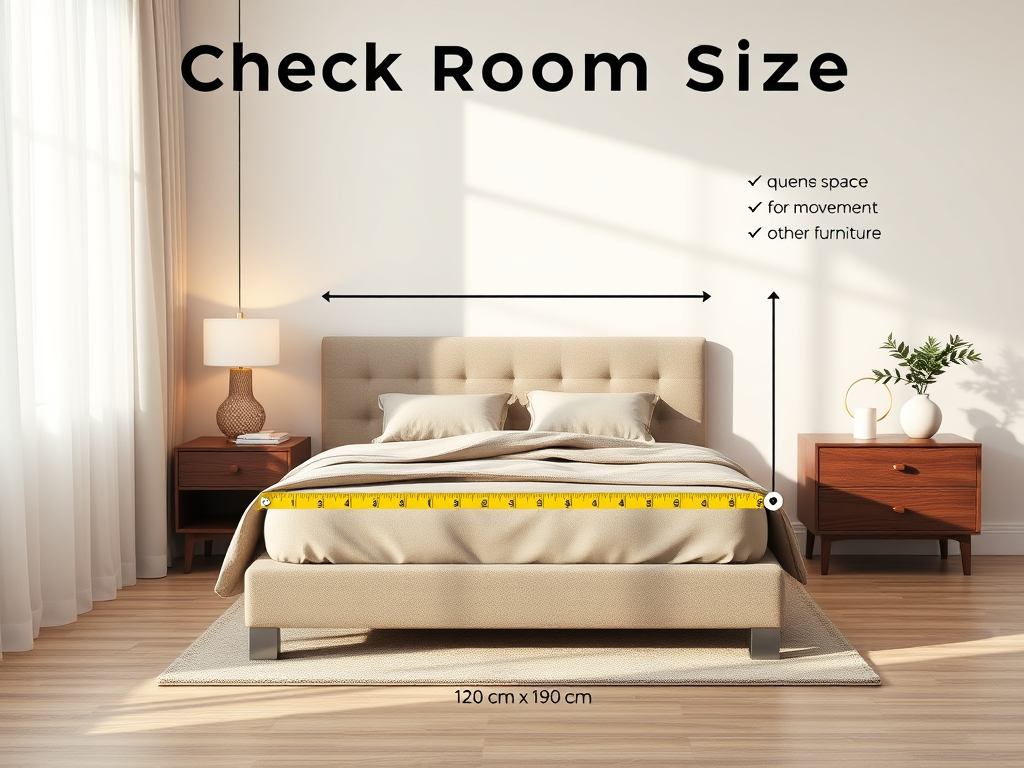
Yes, a bed frame can genuinely improve sleep comfort, sometimes more than people expect. Your mattress can only feel as good as the surface supporting it, so the right frame helps your whole sleep system work as intended.
How Does a Bed Frame Support Your Mattress?
A bed frame supports sleep comfort by keeping your mattress level, stable, and properly ventilated. In other words, it helps the mattress perform as designed, rather than sagging, shifting, or wearing out early.
A good frame does four main jobs: it prevents dips (especially under your hips and torso), reduces movement and creaks, protects mattress edges from collapse, and lifts the mattress off the floor for airflow and hygiene. It also makes getting in and out of bed easier, which matters more as mattresses get thicker and heavier.
Choosing a bed frame and mattress as a pairing is not a luxury upgrade. It is a practical comfort strategy that can improve alignment and extend the life of what you already own.
Why “even support” matters more than most people think
Even support matters because most discomfort begins in the middle third of the bed, where your hips and torso sit. If support is weak there, your mattress can compress unevenly, pulling your spine out of neutral alignment.
Common failures include bowed slats, a weak or missing centre beam, missing centre legs on queen sizes, or a frame sitting unevenly on the floor. What you feel is often subtle at first: pressure points at the shoulders or hips, lower-back tension, and a slight “rolling to the middle” sensation.
Noise is another clue. Loose joints and low-quality hardware can squeak with each turn, creating micro-wakeups that fragment sleep even if you do not fully wake.
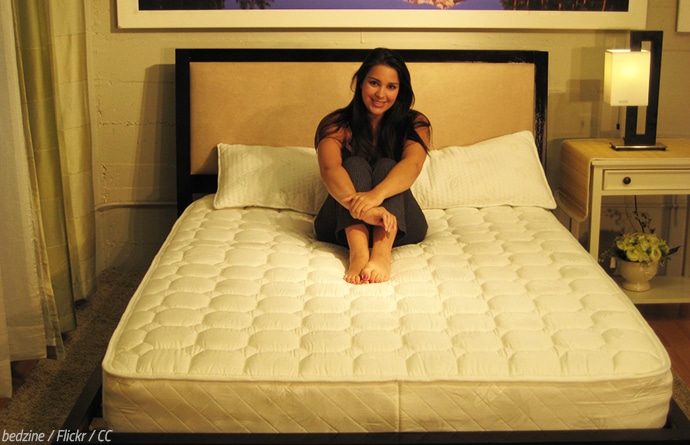
Bed frame vs. base: what’s actually doing the heavy lifting?
The heavy lifting usually comes from the support structure, not the decorative outer frame. Depending on the design, that support might be timber slats, a centre rail and legs, a platform deck, a metal grid, or a combination.
Mattress type changes what you need. Foam and many hybrids typically require closer slat spacing to prevent the mattress sinking into gaps. Pocket spring and traditional innerspring mattresses can be more forgiving, but still rely on strong central support in larger sizes.
Always check manufacturer guidance for slat spacing and weight limits. The wrong base can affect comfort and may even create warranty issues.
What Types of Bed Frame Provide the Best Mattress Support?
The “best” bed frame depends on your mattress type, body weight, and whether you value firmness, airflow, or quiet stability most. The good news is that most options found in an Australian furniture store or outlet can be comfortable if the support specs are right.
You will typically see platform frames, slatted frames, metal frames, and upholstered or timber frames, sometimes with reinforced centre support. Many shoppers end up comparing a metal bed frame queen to a timber alternative, or browsing a queen bed frame sale and trying to separate a good deal from a weak build.
Platform bed frames (solid or closely slatted) for consistent feel
Platform frames tend to provide the most consistent support because the mattress has uniform contact across the surface. That reduces dipping and helps the comfort layers compress evenly.
They are often a strong match for foam and hybrid mattresses, which can feel “truer” on a stable base. The main trade-off is airflow: solid decks can trap heat and moisture, so it is worth looking for ventilation holes, channels, or closely spaced slats instead of a fully sealed panel.
Slatted bed frames: balancing support and airflow
Slatted frames balance support with breathability, which can be ideal in warmer climates or for anyone concerned about moisture and freshness. The key is not just having slats, but having the right slats.
Wider, thicker slats with closer spacing generally support foam better. For queen sizes, a centre support rail plus extra legs helps prevent mid-span sag, which is where many comfort complaints begin. Slatted frames are also easy to maintain: if the bed starts to feel different, you can inspect for loose fittings, shifting slats, or early bowing.
Metal bed frames (especially queen) for strength and stability
A well-built queen metal bed frame is often the most practical choice for strength, rigidity, and long-term stability. When properly tightened, metal frames can be quiet, firm, and resistant to twisting, which helps couples who notice partner movement.
If you are shopping for a metal bed frame queen, look for reinforced corners, a centre beam, multiple support legs, and slat caps or non-slip tape to stop movement. Minimal metal designs also suit modern bedrooms and smaller spaces because they keep the room visually open while still doing the structural job.
Wood or upholstered frames: comfort + aesthetics, but check the internals
Timber and upholstered frames can feel more “comfortable” day to day because of softer edges and supportive headboards for reading. But many complaints about these styles come from what you cannot see: weak internal rails, flimsy slats, or poor centre support.
Before buying, ask what the internal frame is made from, how the joints are secured, and what the slat spacing and thickness are. Upholstery does not fix structural issues, so it is worth treating the internals as the real product and the fabric as the finish.
Can the Wrong Bed Frame Affect Sleep Quality?
Yes, the wrong bed frame can affect sleep quality by changing how your mattress feels, increasing pressure points, and adding noise or motion that disrupts rest. It is a common “silent culprit” when people assume the mattress is the problem.
This shows up often with queen beds because the span is wider. Without proper centre support, the frame can flex over time, and the mattress starts to feel softer in the middle even if it is still relatively new.
Signs your bed frame is the real problem (not your mattress)
Start by checking for movement and sound. If the bed squeaks or creaks when you turn over, or wobbles when you sit on the edge, the frame is likely contributing to broken sleep.
Look for visible sag in the middle, bowed slats, or slats that have shifted out of place. Pay attention to uneven feel: if one area feels softer or you wake with new aches despite a newer mattress, support is a prime suspect. Couples often notice it as increased partner disturbance or a tendency to roll towards the centre.
How a poor match can shorten mattress life
Uneven support forces a mattress to absorb stress it was not designed for. Foam can break down faster where it is repeatedly compressed into gaps, and springs can be strained by ongoing flex and poor weight distribution.
Many mattress warranties also require proper support, including specific slat spacing and adequate centre reinforcement. Upgrading the frame can be a cost-effective alternative to replacing a mattress early, especially if the comfort layers are still in good condition.
Comfort issues the wrong frame can create (and why they feel like “bad sleep”)
A sagging or unstable frame can create pressure points by letting heavier areas sink too far, while other areas stay raised. That pulls your spine out of alignment and often feels like general “bad sleep” rather than one obvious fault.
Poor airflow is another hidden issue, particularly if the mattress sits on the floor. Moisture and heat build-up can affect comfort and freshness. Finally, noise and tiny movements matter. Even small squeaks or vibrations can trigger micro-wakeups that leave you feeling unrefreshed.
What Bed Frame Features Help Improve Sleep Comfort?
The features that improve sleep comfort are mostly structural and practical, not decorative. Focus on what affects support, stability, and the sleep environment, especially for queen sizes where mid-support is crucial.
If you are choosing from a wide bedroom range in-store or online, these are the details that separate a frame that looks good from one that sleeps well.
Structural support features: the non-negotiables
For a queen, prioritise a centre support rail and at least one to two extra centre legs, depending on design and weight rating. This is the simplest way to prevent that “hammock” feel over time.
Look for durable slats or a metal grid with appropriate spacing, plus secure slat holders so nothing shifts. Check the weight rating with real life in mind: two sleepers plus the mattress itself. Finally, assess wobble: squared legs, strong corner joints, and a rigid build reduce movement that can disrupt sleep.
Noise-reduction and stability upgrades that improve real-world sleep
Noise control starts with hardware. Frames with quality fasteners that you can re-tighten tend to stay quieter, and a quick tighten every few months can prevent squeaks.
Rubber gaskets or felt pads at contact points help reduce sound and vibration. Non-slip tape or grips can stop mattress slide, which is common on smooth metal frames. Floor protection pads also help, especially on hard flooring, by reducing both movement and noise.
Comfort-adjacent features: headboards, height, and airflow
A stable headboard makes sitting up to read or relax more comfortable, without the whole bed shifting. Height matters too: the right bed height can make entry and exit easier and allow storage underneath, which can support better sleep hygiene by keeping the room tidier.
Airflow under the mattress is underrated. Under-bed clearance and breathable support help control moisture and maintain freshness, particularly in humid or warm conditions.
How Do You Choose the Right Bed Frame for Better Sleep?
Choose the right bed frame by starting with mattress requirements, then narrowing by your sleep needs, and only then shopping for style and price. This approach works whether you are buying new, upgrading during a queen bed frame sale, or browsing a bed frame outlet for value.
If you are unsure, knowledgeable staff can usually confirm support specs quickly, and fast delivery plus good customer service makes a practical upgrade easier to follow through on.
Step 1: Start with your mattress type and support requirements
Foam and hybrid mattresses typically need closely spaced slats or a supportive platform to avoid dipping into gaps. Innerspring and pocket spring mattresses can work well on slats or grids, but still need strong centre support to prevent long-term sagging.
If you are buying a new mattress too, consider a coordinated bed frame and mattress combo so the feel is predictable from day one. It removes guesswork and reduces the risk of a mismatch.
Step 2: Match the frame to your body, sleep style, and room
Side sleepers usually benefit from consistent, even support because it helps the mattress cushion shoulders and hips without collapsing underneath them. Couples should prioritise stability and low noise, and a strong queen metal bed frame can be a smart option if motion and creaks are an issue.
For smaller rooms, minimalist frames can save space visually and physically. Keep an eye on clearance for walking space and practical storage if you need it.
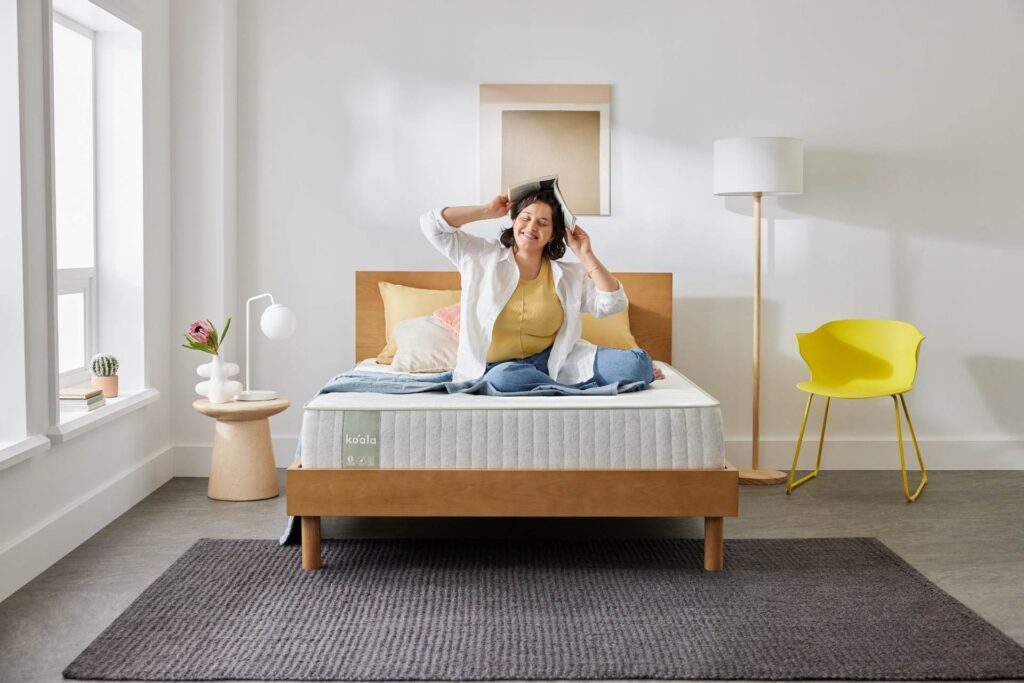
Step 3: Use a quick checklist before you buy (especially on sale)
For queen sizes, confirm the presence of a centre support rail with additional legs, appropriate slat spacing, and a weight capacity aligned with household usage requirements, following queen bed frame structural support and load-bearing specification standards. Also verify warranty compatibility with your mattress, particularly when protecting a newer investment.
Where possible, assess build quality in person by checking joint integrity, finish quality, and overall structural stability with minimal wobble. Any queen bed frame sale should be evaluated not only on price but on engineering robustness, as insufficient support can accelerate mattress wear and negatively impact sleep performance over time.
Step 4: Consider shopping at a bed frame outlet (without compromising comfort)
Outlet and clearance deals can be a smart way to upgrade comfort on a budget, as long as quality is verified. The goal is to pay less without accepting weak support.
Ask about returns, delivery times, assembly support, and product condition standards. A good outlet should still offer quality assurance, affordability, quick delivery, and customer-focused service. If those boxes are ticked, upgrading your frame can be one of the simplest ways to improve sleep comfort without replacing your mattress.